
 Anechoic Chamber & Shielding Room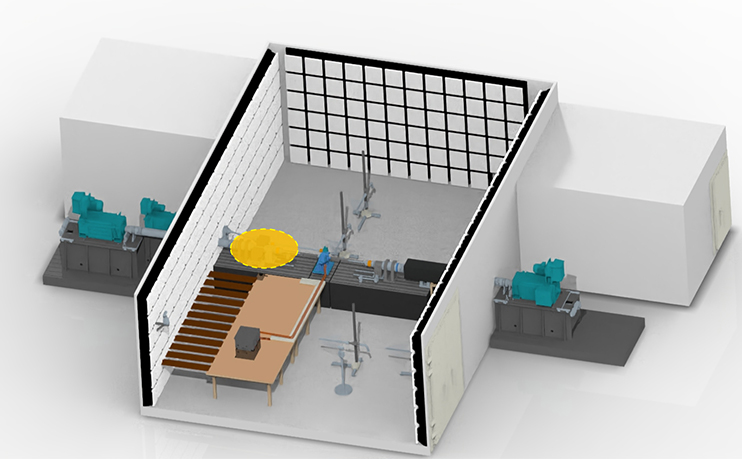
Main application areas
Mainly serving the new energy vehicle industry chain, including motor manufacturers, powertrain suppliers, and vehicle enterprises, used for product research and development, production quality control, and EMC certification testing to ensure that products comply with international standards (such as CISPR25, GB/T 18655, etc.).
Key Parameters
1. core functionality
Used to simulate the electromagnetic radiation and anti-interference performance testing of motors and powertrains under real working conditions, ensuring the safe and stable operation of new energy vehicle electronic systems in complex electromagnetic environments. By loading a dynamometer to simulate the driving load of a vehicle, combined with the shielding and absorption characteristics of an anechoic chamber, precise measurement of the electromagnetic characteristics of the motor system can be achieved.
2. Key components
Shielding and absorption system: using metal shielding shell and high-performance absorption materials to isolate external electromagnetic interference and absorb internal reflected waves, ensuring the electromagnetic cleanliness of the testing environment.
Motor loading device: including a dynamometer, frequency converter, and drive shaft, simulating motor loads under different operating conditions to achieve power transmission and dynamic testing.
Power management system: The battery simulator or power management system provides stable power supply to the motor and recovers braking energy, simulating the characteristics of the onboard power supply.
Monitoring and Control System: Real time monitoring of temperature, vibration, and other parameters of motors, dynamometers, and transmission systems to ensure testing safety and data accuracy.
3. Technical Features
Shielding effectiveness guarantee: Address the issue of electromagnetic interference leakage caused by the high-speed rotation of the motor to ensure that the shielding effectiveness of the anechoic chamber meets the standards.
Vibration and stability control: Address the vibration challenges brought by long drive shafts to avoid affecting test accuracy and the safety of the anechoic chamber structure.
Multi-system collaborative design: Coordinate the compatibility of the motor loading system, power supply system and anechoic chamber shielding system to meet complex testing requirements.