

 Anechoic Chamber & Shielding Room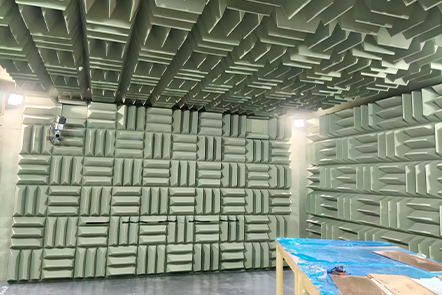
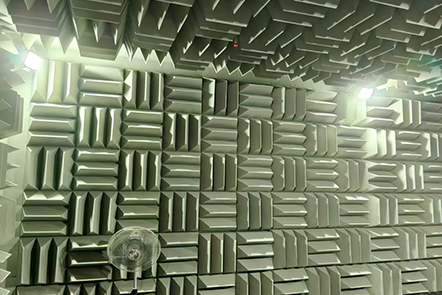
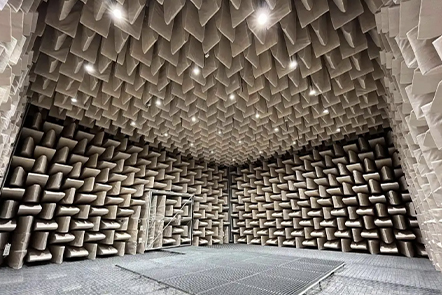
Main application areas
The home appliance and consumer electronics industry, the automotive industry, the aerospace industry, the communication and electronics industry, the mechanical equipment industry, the construction and building materials industry, the medical equipment industry, scientific research, education and testing institutions, and others.
Key Parameters
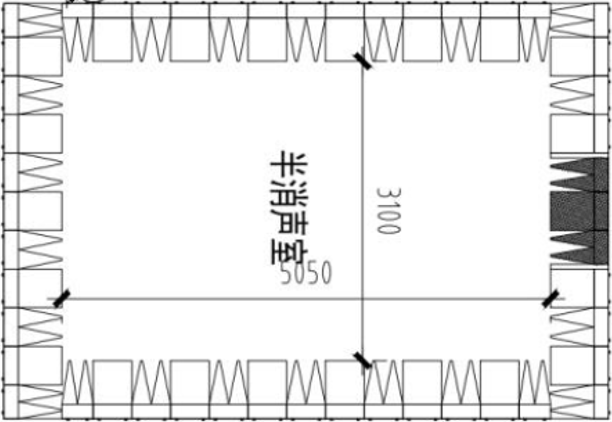
The size of the anechoic chamber:
The main considerations are the test object and the design requirements of the anechoic chamber (such as background noise and cut-off frequency, etc.).
Different types of products (such as automobiles, home appliances, communication equipment, etc.) have different space requirements for anechoic chambers. For example, testing aircraft requires an extremely large space.
The volume of an anechoic chamber should generally be at least 200 times that of the object being measured. It should also ensure that there is working space for personnel to enter and meet the requirements of the sound field radius size.
The area of the anechoic chamber also determines the cost. The larger the area, the higher the required cost will be relatively. Therefore, in addition to the conditions of the venue itself, the budget also indirectly determines the area of the anechoic chamber.
Background noise in the anechoic chamber:
Background noise, also translated as "background noise". It generally refers to all interferences that occur, are inspected, measured or recorded in a system and are not related to the presence or absence of a signal. However, in industrial noise or environmental noise measurement, it refers to the surrounding environmental noise outside the noise source being measured. When measuring noise on the streets near a factory, if the noise to be measured is traffic noise, then the factory noise is background noise. If the purpose of the measurement is to determine factory noise, traffic noise becomes background noise. During the noise measurement process. Attention must be paid to the degree of interference from background noise.
When measuring noise. Even if the sound source being measured stops making sounds, there is still a certain amount of noise in the environment, which is called environmental noise or background noise. Background noise will inevitably affect the noise measurement results. In other words, the measurement result is essentially the combined outcome of the noise under investigation and the background noise. Only after deducting the background noise from this result can the correct sound pressure level value of the noise under investigation be obtained.
When the background noise is 20 dB lower than the measured noise, the correction of the background noise is not necessary. If the sound pressure level of the measured noise source and the sound pressure levels of each frequency band are respectively 10 dB higher than those of the background noise and each frequency band, the influence of background noise can be ignored. If the measured noise differs from the background noise by 3 to 10 dB, correction should be made. If the difference between the two is less than 3dB, the measurement result is invalid.