
 Anechoic Chamber & Shielding Room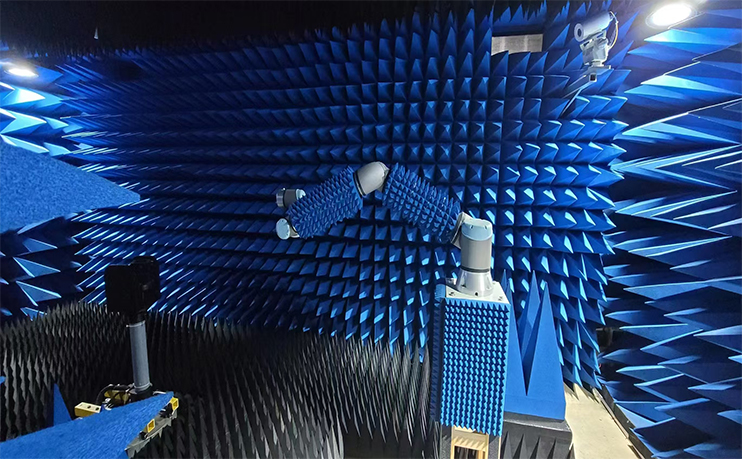
Main application areas
Mainly used in metrology institutions, research institutions, and enterprise laboratories to regularly calibrate field strength probes and ensure the reliability of electromagnetic measurements.
Key Parameters
1. Function and Role
Field strength probes are used to measure the intensity of electromagnetic fields and are widely applied in electromagnetic compatibility testing, communication, power and other fields. The calibration anechoic chamber simulates an ideal electromagnetic environment, eliminates external interference, and provides standard calibration conditions for the field strength probe, ensuring the accuracy and consistency of its measurement results.
2. Type and application scope of anechoic chamber
Microwave anechoic chamber: Suitable for high-frequency bands (such as 1GHz-18GHz), it absorbs reflected signals through special absorbing materials to simulate a free-space environment.
GTEM chamber: Suitable for the mid-frequency band (such as 10 MHZ -1GHz), combined with TEM waveguide technology, it provides computable standard field strength.
TEM chamber: Suitable for low-frequency bands (such as 10kHz-200MHz), it generates uniform field strength through precisely designed waveguide structures.
3. Calibration process
In the anechoic chamber, a known field strength is generated through a standard antenna or field strength source. The probe to be calibrated is placed at a specific position. The measured value is compared with the standard value, the calibration factor is calculated, and the measurement error of the probe is corrected.
4. Environmental requirements
The anechoic chamber must meet strict electromagnetic environment requirements. For instance, the standing wave ratio (VSWR) of the field voltage should be controlled within ±0.5dB to ensure uniform field strength distribution.
5. Application scenarios
It is mainly used in metrology institutions, scientific research units and enterprise laboratories for regular calibration of field strength probes to ensure the reliability of electromagnetic measurement.