

 Anechoic Chamber & Shielding Room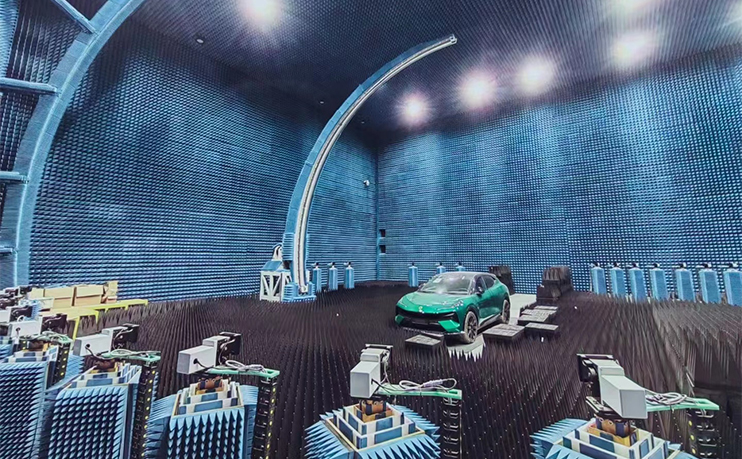
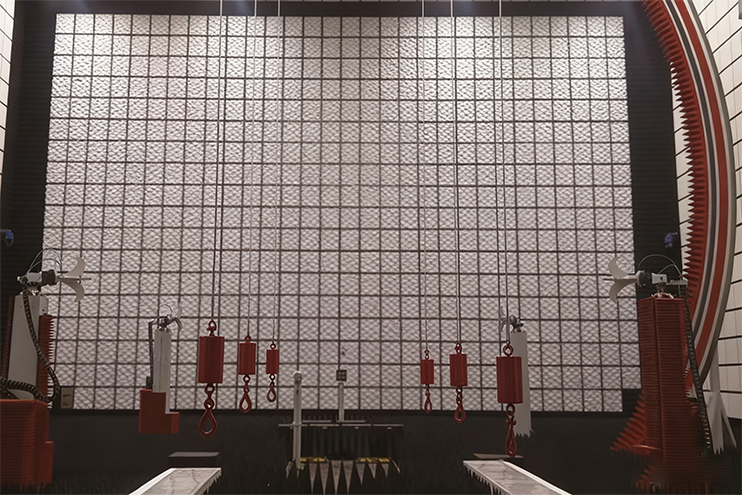
Main application areas
Product development stage: Assist engineers in optimizing automotive antenna design and RF performance to ensure that the product meets industry standards and user needs.
Production quality control: Conduct random or full inspections on mass-produced cars to ensure product quality consistency.
Certification and compliance testing: Meet the certification requirements of relevant domestic and international standards (such as 3GPP, CTIA, etc.), and assist in the entry of automobiles into the market。
Key Parameters
1. Function and Role
The core function of OTA testing: It is mainly used to evaluate the wireless communication performance of automobiles, such as cellular communication, Bluetooth, Wi-Fi, V2X, etc. By simulating a real wireless environment, the signal transmission and reception capabilities of the equipment, as well as its performance in different frequency bands and angles, are tested to ensure that the car can stably connect to the network and transmit data during actual use.
Supports multiple test scenarios: It can conduct active tests (such as signal strength and transmission rate tests) and passive tests (such as antenna pattern and gain tests), and can also simulate complex electromagnetic environments to verify the anti-interference capability of automobiles.
2. Technical Features
Absorbing materials and shielding design: The interior of the anechoic chamber is covered with absorbing materials to absorb reflected signals, reduce interference, and create a nearly non-reflective quiet zone environment. Meanwhile, the anechoic chamber has excellent electromagnetic shielding performance to prevent external electromagnetic signals from interfering with the test results.
Multi-band compatibility: Supports a wide range of frequency band tests from low frequencies (such as 2.4GHz Wi-Fi, Bluetooth) to high frequencies (such as 5G millimeter waves), meeting the testing requirements of different automotive devices.
Automated testing system: Equipped with automated testing equipment and software, it can quickly complete a large number of testing tasks, improving testing efficiency and accuracy. For instance, by rotating the car through a turntable, multi-angle testing can be achieved.
3. Application scenarios
Product development stage: Assist engineers in optimizing the design of automotive antennas and RF performance to ensure that the products meet industry standards and user requirements.
Production quality control: Conduct random or full inspections on mass-produced automobiles to ensure the consistency of product quality.
Certification and compliance testing: Meet the certification requirements of relevant domestic and international standards (such as 3GPP, CTIA, etc.) to help automobiles enter the market.
4. The difference from traditional tests
No physical connection required: Unlike traditional conduction testing, OTA anechoic chambers conduct tests by transmitting signals in the air, which is closer to the actual usage environment of automobiles and can more accurately reflect the performance of the equipment in real scenarios.
Higher testing efficiency: Especially for complex automotive equipment or large-scale production, OTA anechoic chambers can quickly complete multi-dimensional tests, shortening the R&D and production cycles.
5. Construction and maintenance
Space and Cost: Building an OTA anechoic chamber requires a large space and high cost. However, with the development of technology, miniaturized and low-cost anechoic chamber solutions have gradually emerged, lowering the application threshold.
Regular calibration: To ensure the accuracy of the test, the anechoic chamber needs to be calibrated and maintained regularly to ensure that the performance of the absorbing material, parameters of the testing equipment, etc. meet the standards.