

 Anechoic Chamber & Shielding Room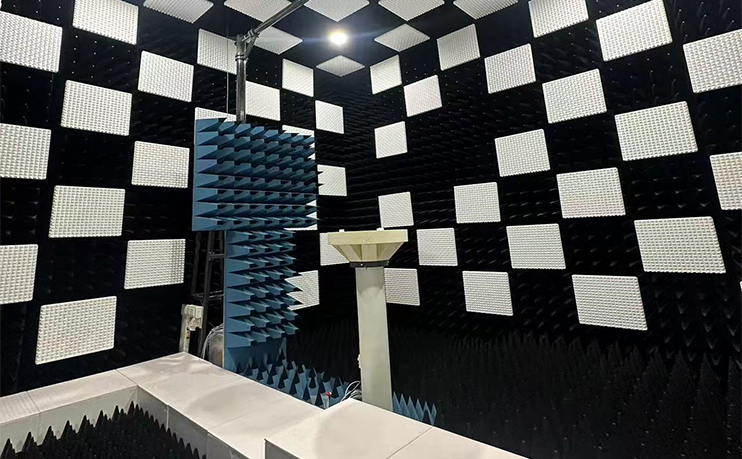
Main application areas
Product development: Assist engineers in optimizing antenna design and improving device wireless performance.
Production testing: Batch testing of wireless functionality of equipment to ensure product quality consistency.
Certification testing: Meet the requirements of domestic and international communication standards (such as 3GPP, CTIA) to facilitate product market access.
Key Parameters
1. Function and Function
OTA (Over-The-Air) anechoic chambers are mainly used to evaluate the wireless communication performance of Internet of Things (iot) devices, such as mobile phones, smart home devices, and in-vehicle terminals. By simulating a real wireless environment, the signal transmission and reception capabilities of the equipment, as well as key indicators such as the antenna radiation pattern and sensitivity, are tested to ensure that the equipment can stably connect to the network during actual use.
2. Technical Principle
Far field testing: Measure the radiation field of the equipment at a sufficient distance (far field area) to ensure that the test results are not affected by near-field interference.
Near field testing: By combining near-field scanning with near-field to far-field conversion algorithms, the radiation characteristics of the device can be quickly obtained, which is suitable for rapid verification in the research and development stage.
Tightening field testing: using a reflective surface to convert spherical waves into plane waves, shortening the testing distance and improving testing efficiency, commonly used in millimeter wave frequency band testing.
3. Design features of anechoic chamber
Absorbing material: The anechoic chamber is covered with absorbing materials inside to absorb reflected signals, reduce interference and ensure a pure test environment.
Quiet zone control: By optimizing the layout of absorbing materials and testing distance, the electromagnetic field in the quiet zone (testing area) is ensured to be uniform and stable, meeting the testing requirements of different frequency bands.
Multi band compatibility: Supports wideband testing from low frequency (such as 2.4GHz) to high frequency (such as 5G millimeter wave), adapting to the diverse communication needs of IoT devices.
4. Application scenarios
Product development: Assist engineers in optimizing antenna design and improving device wireless performance.
Production testing: Batch testing of wireless functionality of equipment to ensure product quality consistency.
Certification testing: Meet the requirements of domestic and international communication standards (such as 3GPP, CTIA) to facilitate product market access.
5. Association with Intelligent Internet of Things
With the intelligent and wireless development of Internet of Things (iot) devices, OTA anechoic chambers have become a key link in ensuring the interconnection and interoperability of devices as well as user experience. Through precise testing, ensure stable communication of devices in complex environments, and promote technological progress in fields such as smart homes, industrial Internet of Things, and Internet of Vehicles.